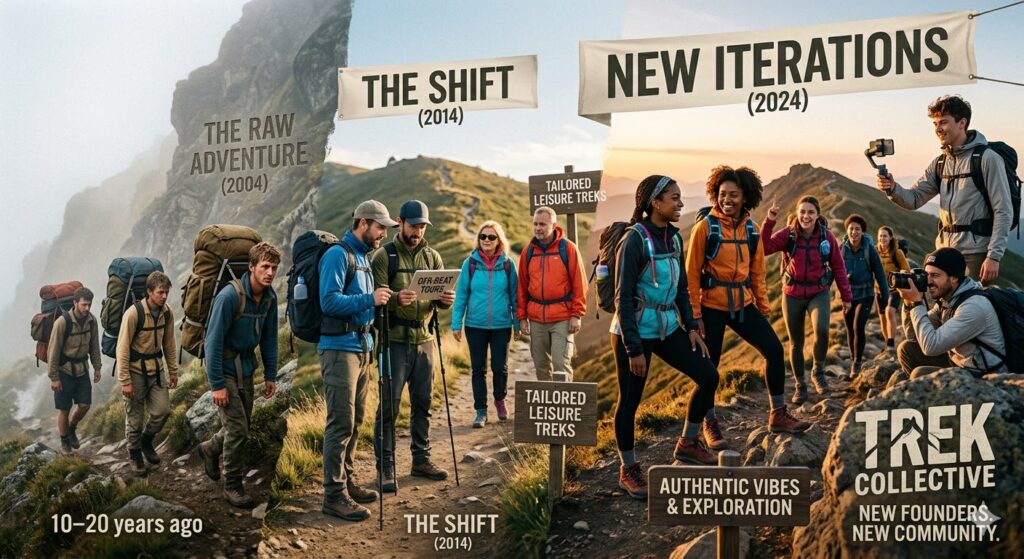
Trekking groups evolve or close or form new iterations every 10-20 years
Trekking groups often experience a “change of guard,” where groups evolve, close, or form new iterations every 10-20 years. This cyclical nature is driven by shifting leadership, evolving trekking trends, and the need for fresh adventure perspectives, with many established groups in India’s Western Ghats operating for over a decade
trek cycle of life
Group Evolution & Lifecycle: Trekking organizations, especially in places like Maharashtra, frequently see new groups emerge as experienced trekkers start their own ventures, while others close or rebrand.
Leadership Change: A “change of guard” often implies a transfer of responsibility to new, younger leaders to maintain energy levels and safety standards within the trekking community.
Common Established Groups (10+ Years): Many professional groups, such as Chakram Hikers, Treks and Trails, and Explorers Treks & Tours, have maintained a long-standing presence (10+ years), providing stability amid the entry and exit of smaller, short-term groups.
Themed and Dynamic Shifts: Modern trekking groups are increasingly specializing, with new groups focusing on niche areas like specific wildlife tracking or historical treks.
The 10-20 year cycle allows the trekking community to adapt to new technology, safety protocols, and changing ecological guidelines.
As the report confirms, young people, particularly those aged 25 to 34, play a crucial role in this trend, as they are the most likely to practice hiking regularly.
The Evolution of Trekking Groups
Old Groups Closing: Traditional trekking clubs are facing challenges due to changing preferences, stricter environmental regulations, and the loss of younger participants who find traditional setups too rigid or slow.
New Young Groups Forming: New trekking communities are emerging, often organized through social media, focusing on “off-the-beaten-path” destinations, and digital-first booking.
Digital Transformation: These new groups emphasize Instagram-friendly locations, quick weekend getaways, and flexible, decentralized community structures rather than traditional large-group, regimented trekking.
Key Drivers of this Shift
Social Media & Visibility: The craving for “photogenic” sports and “adventure influencers” fuels high participation in visually appealing activities like mountain biking and hiking.
Digital Detox & Well-being: Despite being tech-savvy, young adults use trekking as a deliberate way to escape screen time, offering a balance of nature and social connectivity
Social Media & Visibility: The craving for “photogenic” sports and “adventure influencers” fuels high participation in visually appealing activities like mountain biking and hiking.
Digital Detox & Well-being: Despite being tech-savvy, young adults use trekking as a deliberate way to escape screen time, offering a balance of nature and social connectivity
It is a fascinating cycle to watch. The shift from “pure” trekking to commercialized “tours” often happens because of the natural evolution of the founders and their original community.
Why the 10–15 Year Pivot Happens
The “Old Guard” groups usually hit a crossroads for a few specific reasons:
Physical Evolution: Founders who started in their 20s are now in their late 30s or 40s. Priorities often shift from sleeping in caves or high-endurance pushes to “luxury treks” or family-friendly tours with better amenities.
The Monetization Trap: Pure trekking is often a passion project with low margins. To make a sustainable living, groups often pivot to high-volume leisure tours or corporate off-sites where the profit is more reliable.
Burnout and Logistics: Managing the logistics of remote, rugged treks for over a decade is exhausting. Transitioning to sightseeing tours is logistically “safer” and requires less specialized rescue/safety readiness.
The Rise of the New Wave
The surge of “Young Founders” you’re seeing reflects the same energy the older groups had 15 years ago, but with two modern advantages:
Digital Native Marketing: Younger groups are often better at “Instagrammable” storytelling. They focus on short-form video and high-quality aesthetics that appeal to Gen Z and younger Millennials who are looking for an “experience” as much as a climb.
Exploration vs. Tradition: While older groups might stick to the “classic” routes they know by heart, new groups are often hungry to find “offbeat” or undocumented trails to differentiate themselves in a crowded market.
Community-First Models: Many of these newer startups focus heavily on building a “vibe” or a specific social circle, making the trek feel like a weekend getaway with friends rather than a formal guided expedition.
The Challenge for the New Groups
The real test for these younger founders will be longevity. Many new groups pop up quickly but struggle with:
Safety Standards: Experience in technical terrain and medical emergencies takes years to build.
Environmental Impact: High-frequency trekking by many small groups can lead to trail degradation if they aren’t practicing “Leave No Trace” principles as strictly as the veteran clubs.
It will be interesting to see which of these new groups are still doing “raw” treks in 2040, or if they’ll follow the same path into the tour industry.
Do you think the quality of the technical trekking experience is staying the same with this shift, or is it becoming too “commercial”?
ट्रेकिंग गटांची उत्क्रांती
जुने गट बंद होत आहेत: बदलत्या आवडीनिवडी, कडक पर्यावरणीय नियम आणि पारंपरिक रचना खूपच ताठर किंवा संथ वाटणाऱ्या तरुण सहभागींच्या घटत्या सहभागामुळे पारंपरिक ट्रेकिंग क्लब आव्हानांना तोंड देत आहेत.
नवीन तरुण गट तयार होत आहेत: नवीन ट्रेकिंग समुदाय उदयास येत आहेत, जे अनेकदा सोशल मीडियाद्वारे संघटित होतात आणि नेहमीच्या वाटेपासून दूर असलेल्या ठिकाणांवर व डिजिटल-फर्स्ट बुकिंगवर लक्ष केंद्रित करतात.
डिजिटल परिवर्तन: हे नवीन गट पारंपरिक मोठ्या-गटांच्या, शिस्तबद्ध ट्रेकिंगऐवजी इन्स्टाग्राम-फ्रेंडली ठिकाणे, वीकेंडला झटपट सहली आणि लवचिक, विकेंद्रित सामुदायिक रचनांवर भर देतात.
या बदलामागील प्रमुख कारणे
सोशल मीडिया आणि प्रसिद्धी: ‘फोटोजेनिक’ खेळ आणि ‘अॅडव्हेंचर इन्फ्लुएन्सर्स’ची आवड माउंटन बाइकिंग आणि हायकिंगसारख्या दृश्यात्मक आकर्षक उपक्रमांमध्ये मोठ्या सहभागाला चालना देते.
शाश्वतता आणि पर्यावरण-जागरूकता: तरुण पिढ्या पारंपरिक, उच्च-उपभोगाच्या पर्यटनापेक्षा कमी-परिणामकारक, पर्यावरणास जबाबदार असलेल्या प्रवासाला प्राधान्य देतात.
डिजिटल डिटॉक्स आणि आरोग्य: तंत्रज्ञानात पारंगत असूनही, तरुण पिढी स्क्रीन टाइमपासून दूर राहण्यासाठी जाणीवपूर्वक ट्रेकिंगचा वापर करते, ज्यामुळे त्यांना निसर्ग आणि सामाजिक संबंधांचा समतोल साधता येतो.
या बदलामागील प्रमुख कारणे
सोशल मीडिया आणि प्रसिद्धी: ‘फोटोसाठी आकर्षक’ खेळ आणि ‘ॲडव्हेंचर इन्फ्लुएन्सर्स’ यांच्या आकर्षणामुळे माउंटन बाइकिंग आणि हायकिंगसारख्या दृश्यात्मक दृष्ट्या आकर्षक उपक्रमांमध्ये मोठ्या प्रमाणात सहभाग वाढतो.
शाश्वतता आणि पर्यावरण-जागरूकता: तरुण पिढी पारंपरिक, जास्त उपभोग घेणाऱ्या पर्यटनापेक्षा कमी परिणाम करणाऱ्या आणि पर्यावरणास जबाबदार असलेल्या प्रवासाला प्राधान्य देते.
डिजिटल डिटॉक्स आणि आरोग्य: तंत्रज्ञानात पारंगत असूनही, तरुण पिढी स्क्रीन टाइमपासून दूर राहण्यासाठी जाणीवपूर्वक ट्रेकिंगचा वापर करते, ज्यामुळे त्यांना निसर्ग आणि सामाजिक संबंधांचा समतोल साधता येतो.