
- This event has passed.
Ecological Society Pune Mayureshwar Wildlife Sanctuary 26th October 2025 – 25 October 2025
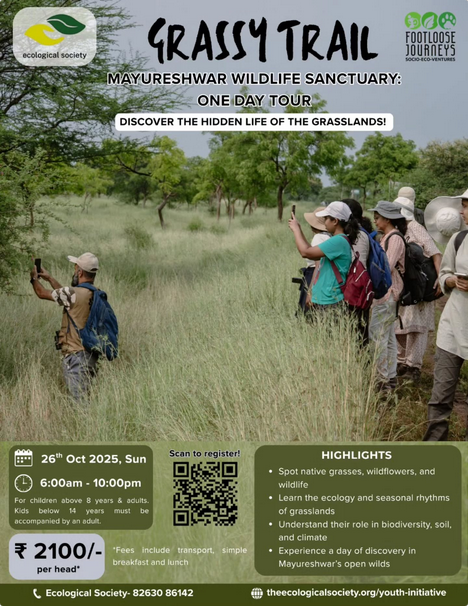
Join us on an adventurous #GrassyTrail at Mayureshwar Wildlife Sanctuary! ?
Discover the hidden life of the grasslands on a one-day tour with Ecological Society.
Observe native grasses, wildflowers, and elusive wildlife, while learning about ecosystem rhythms, biodiversity, and climate.
Experience a day packed with immersive discovery and delicious food in nature’s lap!
Join our tour at Mayureshwar Wildlife Sanctuary on 26th October 2025, Sunday, from 6:00 AM to 10:00 PM.
This walk is perfect for children (7+ years), parents, and anyone eager to boost their ecological literacy.
? Date: 26th October 2025, Sunday
⏰ Time: 6am – 10pm
? Fees: ₹2100/- per head (includes transport, breakfast, lunch)
? Open for children 8+ (kids under 14 must be accompanied)
register or scan the QR code on the poster!
An Overview of Mayureshwar Wildlife Sanctuary
Mayureshwar Wildlife Sanctuary is a compact yet significant protected area located in the Pune district of Maharashtra, India. It is a unique example of successful conservation, primarily known for being a rehabilitation centre for the Chinkara (Indian Gazelle). Its proximity to major cities like Pune and Mumbai makes it a popular destination for nature lovers, wildlife photographers, and families looking for a quick nature getaway.
The name “Mayureshwar” is derived from “Mayur,” the Sanskrit word for peacock, and the sanctuary is indeed a paradise for these magnificent birds.
Key Highlights
- Chinkara Rehabilitation Project: The sanctuary’s primary purpose is to provide a safe haven for the Chinkara, which were translocated here from a drought-prone area in Aundh, Satara district.
- Peacock Paradise: Home to a large and thriving population of Indian Peafowl, offering spectacular sightings, especially during the monsoon season.
- Eco-Tourism Hub: It’s a model for low-impact tourism, allowing visitors to experience nature in a controlled and respectful manner.
- Accessibility: Located just about 70 km from Pune, it’s perfect for a day trip or a weekend excursion.
- Diverse Ecosystem: Despite its small size, it boasts a variety of flora and fauna adapted to the dry deciduous and scrub forest landscape.
Detailed Information
1. Location
- State: Maharashtra
- District: Pune
- Taluka: Baramati
- Nearby Town: Supa
- Distance from Pune: Approximately 70 km
- Distance from Mumbai: Approximately 250 km
2. Flora and Fauna
The sanctuary’s landscape is characterized by dry, rocky plains interspersed with scrublands and small patches of forest.
Fauna (Animals):
- Mammals:
- Chinkara (Indian Gazelle): The star attraction and the reason for the sanctuary’s existence.
- Indian Peafowl (Peacock): Abundant and easily spotted.
- Indian Wolf
- Indian Fox
- Wild Boar
- Black-naped Hare
- Various species of Mongoose
- Reptiles:
- Monitor Lizard
- Indian Cobra
- Russell’s Viper
- Rat Snake and other non-venomous snakes.
- Birds (Avifauna): The sanctuary is a delight for birdwatchers, especially after the monsoon.
- Grey Hornbill
- Ashy-crowned Finch-lark
- Indian Roller
- Yellow-wattled Lapwing
- Crested Serpent Eagle
- Paradise Flycatcher
- Various species of doves, parakeets, and warblers.
Flora (Plants):
The vegetation is primarily Southern Tropical Dry Deciduous Forest.
- Trees: Neem, Babul (Acacia), Tendu, Ain, Palas (Flame of the Forest).
- Shrubs and Grasses: A variety of thorny shrubs and grasses that are well-adapted to the arid conditions.
3. History and Significance
Established in 1997, the Mayureshwar Wildlife Sanctuary was created with a specific and noble goal. The Chinkara population in the Aundh region of Satara was facing severe threat due to habitat loss and drought. To ensure their survival, a decision was made to translocate them to a more suitable and protected environment. The area around Supa was chosen, and over 30 Chinkaras were successfully relocated and rehabilitated here. The project is considered a major success story in wildlife conservation in Maharashtra.
Visitor Information
Best Time to Visit
- Monsoon (June to September): The landscape turns lush green, and it’s the best time to see peacocks dancing. The weather is pleasant, though some trails might be muddy.
- Winter (October to February): The most comfortable time to visit. The weather is cool and ideal for a safari. Migratory birds can also be spotted.
- Summer (March to May): The weather is hot and dry, but this is often the best time for animal sightings as they congregate near the limited water sources.
Timings and Entry Fees
- Timings: Typically from 7:00 AM to 6:00 PM. It’s best to visit early in the morning or late in the afternoon for the best wildlife activity.
- Entry Fee: Nominal, usually around ₹50-₹100 for adults. Fees for vehicles and cameras are separate.
- Important Note: Timings and fees are subject to change. It is highly recommended to verify the latest information from official sources or local contacts before planning your visit.
How to Reach
- By Road: The sanctuary is well-connected by road. From Pune, you can take the Pune-Satara Highway (NH-48) and then turn off towards Supa. The drive is scenic and takes about 1.5 to 2 hours. You can use your own vehicle within the sanctuary.
- By Rail: The nearest railway station is Pune Junction (PUNE). From there, you can hire a taxi or take a bus to Baramati and then a local vehicle to Supa.
- By Air: The nearest airport is Pune International Airport (PNQ).
Safari and Facilities
- Safari: Unlike larger national parks, you are generally allowed to drive your own vehicle through the sanctuary on a designated path. This offers a more private and flexible experience. The forest department may also operate guided bus tours.
- Facilities: Basic facilities like restrooms and a small interpretation centre are available at the entrance. It’s advisable to carry your own water and snacks.
Tips for Visitors
- Maintain Silence: Animals are easily startled. Keep noise levels to a minimum for a better chance of sightings.
- Wear Appropriate Clothing: Wear dull, earth-colored clothes (khaki, green, brown) to blend in with the environment. Avoid bright colors.
- Carry Binoculars and a Camera: Essential for a fulfilling wildlife experience.
- Do Not Feed Animals: Feeding wildlife disrupts their natural diet and behavior.
- Respect the Environment: Do not litter. Carry all your trash back with you.
- Start Early: Wildlife is most active during the cooler hours of the early morning and late afternoon.